How to Write a Convincing Cover Letter
October 4, 2026

You've probably heard the advice: “Tell your story and show your motivation.” Yet, this often leads to generic, interchangeable cover letters. A convincing cover letter doesn't narrate your life story; it answers a specific recruiter question: have you understood the need behind this job posting, and can you meet it?
Treat your cover letter like a B2B sales document—but avoid turning your application into empty advertising. You need to present a focused value proposition, supported by evidence, in a format the recruiter can quickly grasp.
Why Cover Letters Still Matter
Claiming cover letters are dead is as inaccurate as saying they’re always mandatory. In the UK and US markets, their usage varies by sector and role level. According to recent data, about half of employers request a cover letter during recruitment, especially for professional roles.
The role of the cover letter has shifted rather than disappeared. When requested, it signals effort, understanding, and relevance. Recruiters don’t expect literary masterpieces; they want to see if you’ve read the job posting carefully and can connect your background to a specific problem.
Practical rule: a cover letter that could be sent to five different companies is not yet personalized.
Your CV lists experiences, skills, and dates. Your cover letter explains why these elements fit the role. It can also clarify career changes, lack of experience, or retraining—provided it stays focused on the employer’s needs.
Recent studies confirm this trend. A survey shared by ADP found that only 36% of candidates truly personalize their cover letters, while 88% believe a cover letter increases their chances of an interview. This gap highlights an opportunity: many candidates see value in cover letters but few tailor them effectively.
Your goal is not to write more, but to write more precisely. A good cover letter must prove three things: you understand the role, you have credible evidence to fulfill it, and you have a professional reason to join the organization.
Decoding the Hidden Requirements of the Job Posting
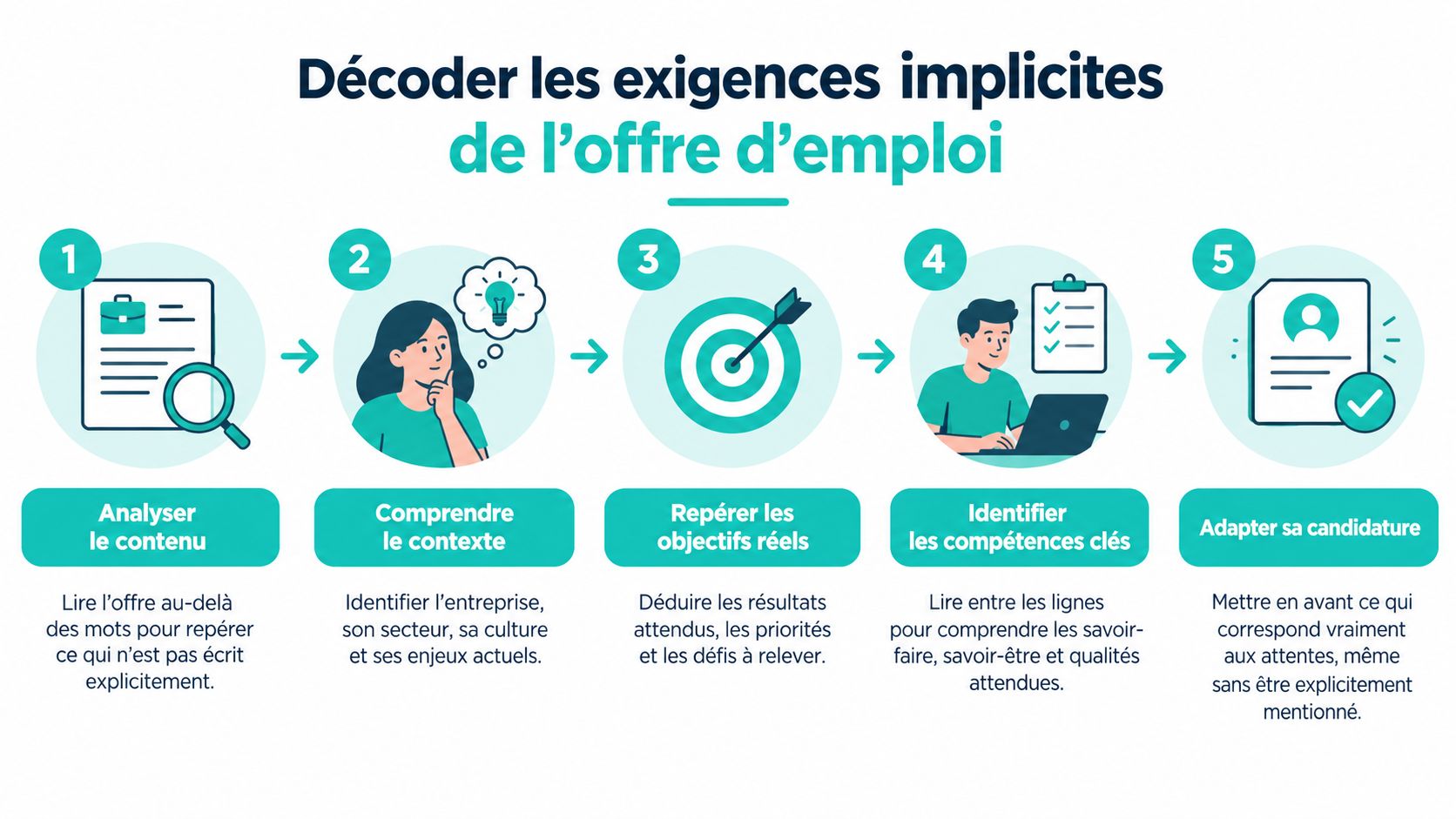
Never start with “Dear Sir or Madam.” Start with the job posting. Read it like a commercial brief: each responsibility reveals a problem to solve, each required skill signals a risk the company wants to mitigate, and repeated words highlight priorities.
A Five-Step Method
Identify the main responsibilities. Don’t just list everything. Focus on what the role will actually entail day-to-day.
Classify the required skills. Separate tools, methods, and behaviors. Mastery of software addresses a different need than the ability to coordinate multiple stakeholders.
Look for underlying challenges. A posting emphasizing autonomy might indicate limited training time. One mentioning client follow-up could reveal a need to strengthen relationships or reminders.
Match your evidence. For each key requirement, pick an experience, study project, volunteer role, or personal achievement that demonstrates your capability.
Eliminate secondary details. A concise letter is stronger when focused on a clear angle. Keep only elements that directly address the role.
For example, if a marketing assistant role requires content creation, campaign tracking, and collaboration with sales teams, avoid vague claims like “versatile and motivated.” Instead, write that your university project involved organizing an editorial calendar, analyzing campaign feedback, and coordinating contributors. Even without paid experience, you provide tangible proof.
Keywords should appear naturally, never as an artificial list. This also helps your application pass digital screening tools. You can explore this further in Jobshift’s guide on ATS filters and recruitment.
Job postings don’t always provide all answers. Check the company’s website, recent projects, and language used in job descriptions. Don’t copy their values; instead, show how your experience supports a concrete priority.
Here’s a helpful video to visualize this analysis-before-writing approach:
Using the You-Me-Us Structure to Convince
The “you, me, us” structure, also recommended by France Travail, works because it mirrors recruitment decision logic. Start with the company’s need, then present your evidence, and finally project a possible collaboration.
You: Show That You Understand the Company
The first paragraph shouldn’t start with “I am writing to apply.” This phrase states your intent but adds no information. Dive straight into the subject.
Your posting emphasizes client portfolio retention and structured follow-ups. This is exactly the challenge I addressed during my final year project in customer relations.
This hook works because it echoes the need before introducing you. For spontaneous applications, start with a verifiable company activity, then state the contribution you can make. Avoid generic compliments like “dynamic and innovative company.”
Me: Provide Evidence Instead of Adjectives
The second paragraph selects parts of your background that match the posting. Don’t just translate your CV into full sentences. Pick one or two experiences and explain what they prove.
A student might write: “During a group data analysis project, I organized data collection, ensured consistency, and presented findings orally. This taught me how to turn data into clear recommendations.” This is more credible than “I am organized, thorough, and confident speaking.”
A career changer can link previous roles to the new position: priority management, client relations, coordinating stakeholders, or incident resolution. The transition should focus on transferable skills and commitment, not long personal justifications.
Us: Propose a Logical Next Step
The final paragraph connects your contribution to the role. Don’t promise results you can’t guarantee. Instead, describe how you could add value.
“I could apply this experience to managing your accounts and improving follow-up reliability. I would welcome a conversation to share the methods used and priorities I would identify in the first weeks.”
End with an invitation to interview. “I remain at your disposal” is correct but passive. Prefer a phrase that encourages next steps: “I would be happy to discuss the role’s priorities and how my background fits.”
For a structured template, see this cover letter model, then replace general phrases with specifics from the posting.
Format and Tone Mistakes to Avoid
A cover letter isn’t a literary exercise. It’s a targeted B2B sales document: its layout should let the recruiter quickly verify you understand the posting and your profile fits a clear need. A confusing format can weaken an otherwise strong application.
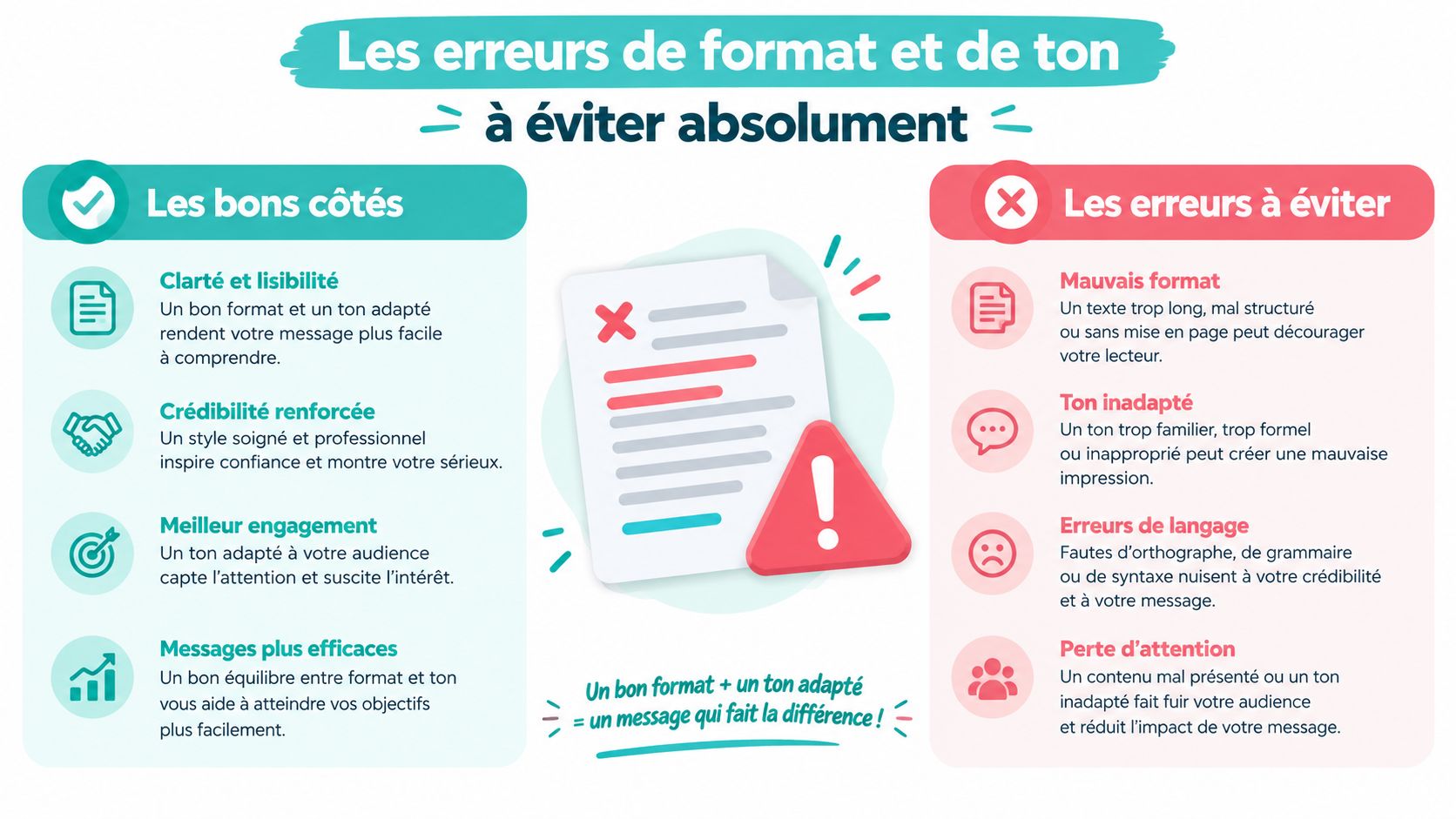
Presentation tips from HelloWork emphasize the need for a readable, well-spaced document suited to context. For UK university applications, the limit is often around 400 words, while some US employers expect a concise one-page letter.
What Weakens Your Application Immediately
- Endless text. Signals difficulty selecting relevant information.
- Dense blocks. Separate ideas and keep one main idea per paragraph.
- Visible copy-paste. Wrong company name, missing job details, or mismatched role breaks trust.
- Unsubstantiated qualities. Words like “dynamic,” “motivated,” or “reliable” are hollow without concrete examples.
- Overly formal tone. A polite closing is enough; recruiters want your contribution, not a ceremonial letter.
- Unchecked errors. Double-check recipient name, job title, grammar, and attachments.
End with a clear call to action: proposing an interview or phone call gives your application a concrete next step without pressure.
Save Time with Jobshift’s Smart Assistance
Personalizing a cover letter requires careful reading of the posting, its priorities, and your own background. When applications pile up, writing becomes a trade-off between speed and relevance. A generic letter weakens your file, while taking too long risks missing the right moment.
Treat each cover letter like a highly targeted B2B sales document. It must show you understand the company’s need and that your experiences provide concrete evidence. Smart assistance can speed up this process by structuring useful information. However, it can’t judge the real value of your examples or your unique phrasing.
A Workflow That Keeps Your Voice
- Select a relevant job posting. First, ensure the role fits your project and transferable skills.
- Confirm priorities. The tool can highlight important terms. Then verify they match your experience.
- Add your evidence. Link each key skill to a specific project, mission, or situation.
- Check the tone. Remove overly smooth phrases, exaggerated promises, and wording that doesn’t sound like you.
- Proofread the final document. Assisted applications always bear your name and reflect your judgment.
The Jobshift cover letter generator can create a first draft based on the posting. Then you refine arguments, examples, and your vision for the role. Use this tool to reduce prep time while retaining responsibility for content.
Initial organization can be automated, but your final judgment makes the difference. If the text could fit any candidate, revisit the posting and add details proving your understanding of the role.
Frequently Asked Questions About Cover Letters
Should I Send a Cover Letter If Not Requested?
Not always. If the job ad doesn’t ask for one and the application form lacks a cover letter field, a targeted email message may suffice. Always follow instructions and use your space to prove your fit for the role.
Ideal Length for a Cover Letter
Aim for one page and three to four paragraphs max. Each paragraph should serve your application: understanding the need, evidence from your experience, or projection into the role. Remove sentences that merely repeat your CV without explaining relevance.
What If I Have No Experience?
Lean on study projects, group work, internships, volunteering, or personal achievements. Describe a specific action, your role, and what it demonstrates for the job. Beginners don’t present the same evidence as experienced professionals but can show method, reliability, and learning ability.
How to Succeed with a Spontaneous Application
Clearly link the company to your proposal. Mention an activity, possible need, or mission type that justifies your approach, then state what you could handle. A letter merely asking for “a role matching my profile” gives no concrete reason for a recruiter to respond.
Which Format to Choose
Follow the ad’s instructions. For attachments, choose a clean layout, include your name and the job title in the file name, then double-check recipient, attachments, and final version. The format should make reading easy, not draw attention to design.
Jobshift helps you find relevant jobs, tailor cover letters to each role’s requirements, and reduce repetitive tasks. Visit Jobshift to prepare targeted applications faster, then carefully review each text. The result should keep your evidence, your voice, and a precise link to the job posting.
À propos de l'auteur
Chris Massie, cofondateur de l'appli Jobshift. Il travaille sur l'outil depuis sa première version : analyse du CV face à l'offre, réécriture automatique des blocs faibles, candidatures envoyées en mode swipe. Profil LinkedIn