Headhunter: how to get noticed (and when to apply directly)
 Chris Massie
Jobshift
November 3, 2026 · 12 min read
Partager l'article
A headhunter is a recruiter, independent or working for a firm, who is hired and paid by a company to find and directly approach candidates, most often people who already have a job. To get noticed, you need to be findable where they search (LinkedIn, network, referrals), with a clear profile that uses the keywords of your occupation. But waiting to be headhunted is not enough: most jobs are also won by applying yourself.
This guide explains what a headhunter really does, how they find candidates, how to make your LinkedIn profile visible, what sets them apart from a recruitment agency or a coach, and how to combine this approach with direct applications.
In short
- A headhunter works for the company, not for you: the company hires and pays them. In France, a placement service cannot charge the candidate.
- They mostly look for specific profiles: executive, expert and management roles or occupations with a shortage of candidates, often people who already have a job.
- They find you if you are findable: an explicit LinkedIn headline, skills consistent with your occupation, detailed experience and the "Open to Work" option set to recruiters.
- Contacting them directly is possible, as long as you are brief and targeted on their sector.
- Don't bet everything on them: keep applying to job ads and with speculative applications, and track everything in a single spreadsheet.
What a headhunter does
A headhunter (also called direct approach or executive search) steps in when a company wants to hire a profile that is hard to find with a simple job ad. They receive a mandate from the company, define the target profile with it, identify potential candidates, approach them discreetly, assess their motivation and skills, then present a short list to the client.
Which roles do companies use them for?
Using a headhunter is expensive for the company. It is therefore reserved for hires where a job ad is not enough: leadership and management roles, expert profiles (finance, tech, data, legal, engineering), occupations with a shortage of candidates, or confidential hires (replacing an executive, opening a new business line). For a first job or a junior role, a headhunter rarely approaches you: these hires mostly go through published job ads, schools and speculative applications.
Who pays them?
The client company. On the candidate side, the French Labour Code is clear: under article L5321-3, no payment, direct or indirect, may be required from job seekers in return for placement services (with exceptions for performing artists and sports agents). If someone presenting themselves as a headhunter asks you to pay to "place" you, be wary: that is not how the profession normally works.

How headhunters find their candidates
Understanding their methods tells you where to be visible. A headhunter usually combines several sources.
Searching LinkedIn and professional networks
This is the most used source. Recruiters search by job title, skills, sector, current or past company and location. If your profile does not contain the words they type, you simply do not appear in their results, however good your background is.
Network and referrals
A good headhunter maintains a contact book in their sector. They often ask their contacts: "Who do you know who would be good for this role?". Being known and recommended in your field (former colleagues, managers, clients, alumni of your school) increases your chances of being mentioned.
Company mapping
For a specific role, the headhunter often lists competing or similar companies, then the people who hold similar roles there. Working for a well-known company in your sector, and saying so clearly, automatically puts you on these lists.
Their candidate database
Firms keep the profiles of candidates met during previous assignments. A past exchange, even without a follow-up, can bring you back onto their radar months later. Candidates' personal data remains governed by the GDPR: the CNIL details the rules that apply to recruitment.
Optimizing your LinkedIn profile to get noticed
Since LinkedIn search is their first tool, that is where your efforts pay off most. LinkedIn's official help even gives its own advice to create a good profile.
A headline that says what you do
The headline (under your name) is the most visible element. Replace "Looking for opportunities" or "Passionate about innovation" with your occupation and specialty, using the terms recruiters use: for example "Industrial management controller | Reporting, budget, SAP". Use real market job titles, not internal titles specific to your company.
Detailed experience with keywords
For each role, describe in a few lines your scope, your main missions and one or two concrete results. Reuse the skills and tools that appear in the job ads for your occupation. It is the same logic as for a resume that recruitment software can read: our guide to the ATS-friendly resume explains how to choose these keywords, and the free ATS test shows you the ones missing for a given job ad.
The Skills section and your location
Add the key skills of your occupation and check your location: many recruiter searches are filtered by city or region. If you are open to relocating, say so in your summary.
The "Open to Work" option in recruiters-only mode
LinkedIn lets you signal that you are open to new opportunities. According to LinkedIn's help on Open to Work, you can choose to show it to all members (with the #OpenToWork photo frame) or to recruiters only, meaning LinkedIn Recruiter users. LinkedIn says it takes steps to hide this information from recruiters at your current company, without being able to guarantee complete confidentiality. If you have a job, the "recruiters only" mode is the most discreet.
Regular activity, even modest
Commenting relevantly on posts in your sector, sharing a lesson learned or a finished project makes your name familiar. No need to become a content creator: a few useful interactions a week are enough to show that your profile is active.
Replying to a headhunter (or contacting one yourself)
When a headhunter contacts you
Reply, even if the role does not interest you: a "thank you, not right now, but I remain open to X roles" keeps the relationship going. If the role interests you, ask for the essential information before going further: the title and scope of the role, the sector and size of the company (the name is sometimes given later), the location and remote work, the salary range and the steps of the process. Then prepare the conversation like an interview: our free interview simulator helps you practice on the questions for the role.
Contacting a headhunter in your sector
You can also take the initiative. Identify headhunters who specialize in your occupation (their LinkedIn headline often mentions the sector they cover), then send a short message:
Hello [First name], I am a [occupation] with [X] years of experience in [sector], specialized in [key skill]. I see that you regularly recruit for this type of profile. I am open to a [job title] role in [city or remote]. My resume is attached in case one of your mandates is a match. Have a good day, [First name Last name]
Keep in mind that a headhunter works on specific mandates: if they have none that matches you, they cannot help you right away. Don't follow up every day. To write this kind of message faster, the application email generator gives you a base to personalize.
Headhunter, recruitment agency or coach: what is the difference?
These three are often confused, even though they do not work for the same person.
| Headhunter | Recruitment agency | Job search coach | |
|---|---|---|---|
| Works for | The hiring company | The hiring company | You, the candidate |
| Who pays? | The company | The company | You (or funding, depending on the case) |
| Method | Direct approach of targeted profiles, often already employed | Job ads, candidate database and sometimes direct approach | Support: career plan, resume, LinkedIn, interviews |
| For whom? | Executives, experts, rare profiles | All levels depending on the agency | Anyone who wants support |
The recruitment agency
A recruitment agency can publish job ads, draw on its candidate database or use direct approach: the line with headhunting is therefore sometimes blurry. In all cases, it is paid by the client company and cannot charge you to place you. Employment agencies and recruitment firms in France are represented by professional organizations such as Prism'emploi.
The job search coach
The coach, on the other hand, works for you: they help you clarify your plan, rework your resume and LinkedIn profile, or prepare your interviews. It is a paid service, unless you use the free support offered in particular by France Travail. A coach does not "find" you a job: they make you more effective in your search. Before paying, ask for a precise program, a number of sessions and references.
Taking the lead: don't wait to be headhunted
Being visible to headhunters is a good complement, but it is a passive approach: you control neither the timing nor the number of offers, and many roles, especially junior and mid-level ones, never go through them. The best strategy is to combine both.
Replying to job ads and applying speculatively
Keep a steady pace of tailored applications: job ads published on the best job sites, career sites of the companies that interest you, and short speculative applications sent directly to the right people. Adapt your resume to each role and create a clean version with the free resume generator if yours is outdated.
Tracking all your leads in one place
Between headhunter approaches, applications and follow-ups, leads get lost quickly. Write down each contact (date, company, contact person, stage, next follow-up) in the free application tracker or in a tracking spreadsheet. If after several weeks you get neither interviews nor approaches, our guide "I can't find a job" helps you spot the step that is blocking.
Mistakes to avoid with headhunters
- Paying to be "placed": in France, a placement service cannot be billed to the candidate. A request for payment is a warning sign.
- A vague LinkedIn profile: without a job title or clear skills, you don't appear in searches.
- Ignoring messages: even a polite refusal keeps the relationship going for a future mandate.
- Lying about your salary or background: the headhunter often checks references, and their credibility with the client is at stake.
- Betting everything on direct approach: it complements an active search, it does not replace it.
Don't wait to be headhunted, apply yourself with Jobshift
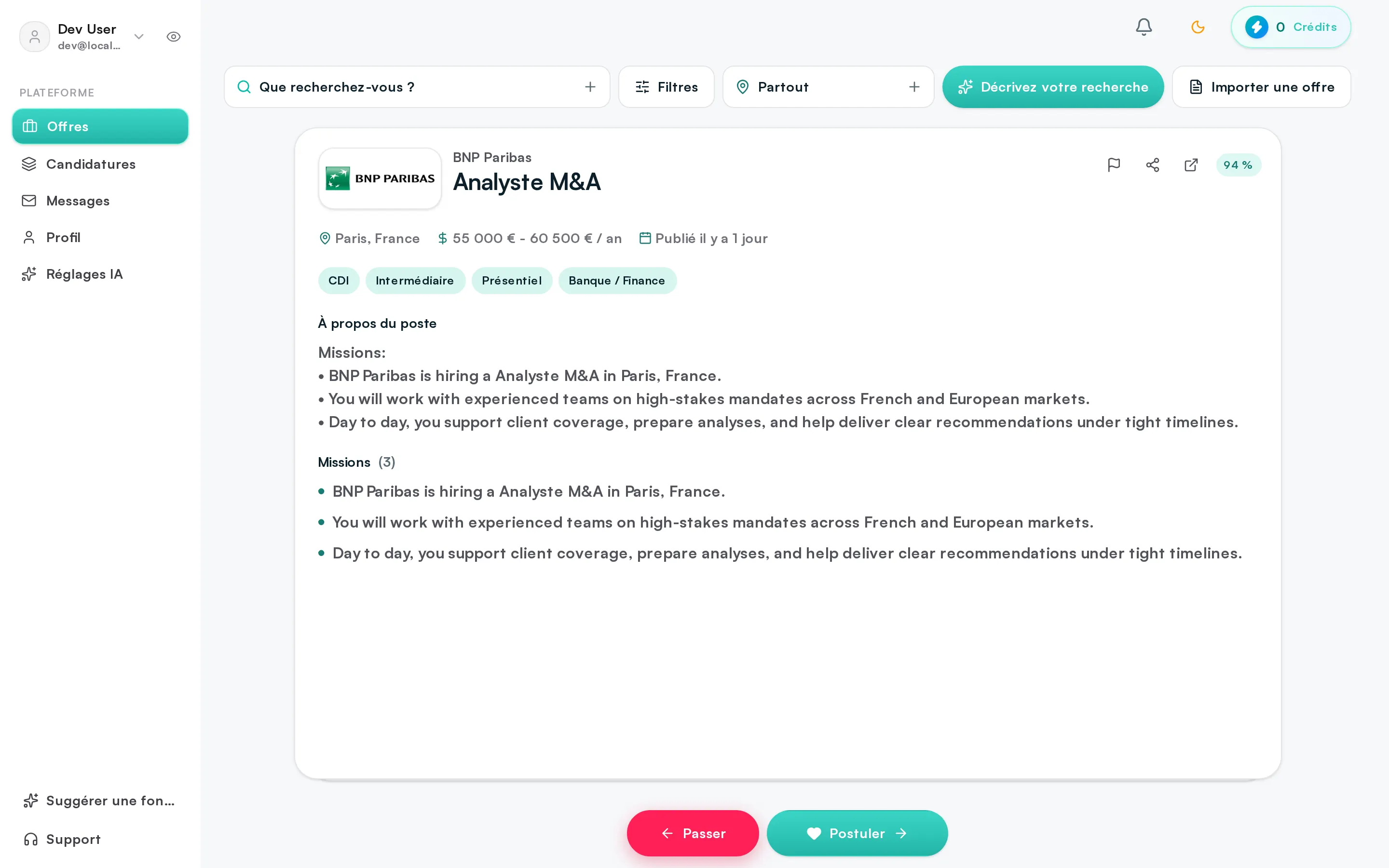
Jobshift is the app that lets you apply to job offers by swiping, like a dating app, but for jobs.
- Swipe right on an offer you like: Jobshift prepares and sends the application for you.
- Resume and message tailored to each offer, with the keywords of the role.
- Centralized tracking of all your applications, so you know whom to follow up with and when.
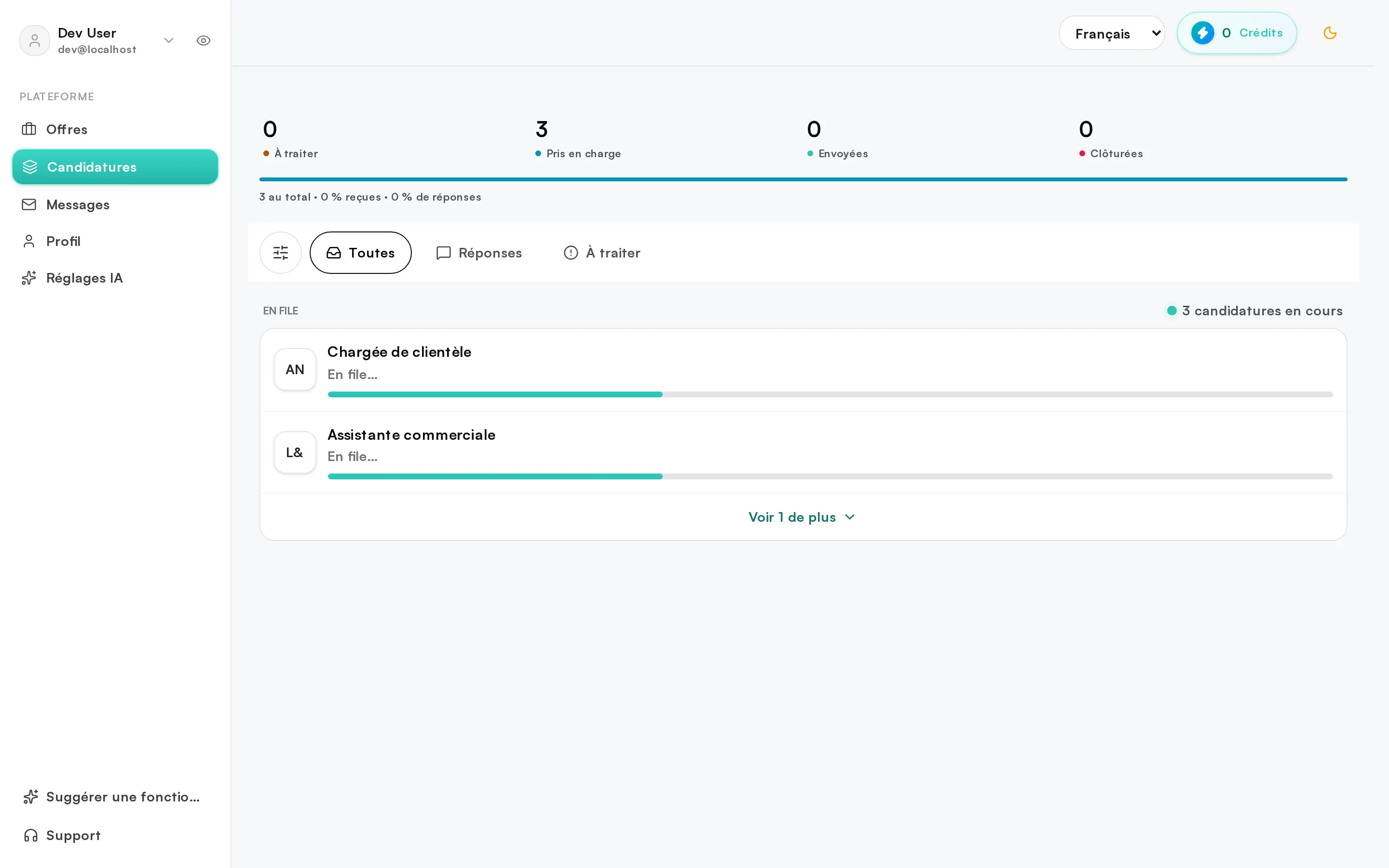
You keep your LinkedIn profile up to date for headhunters, and meanwhile your applications move forward. To compare the two approaches, see our page Jobshift vs LinkedIn.
Don't wait to be headhunted: apply yourself in 1 swipe. Create your profile in a few minutes and start applying to the offers that match you. Try Jobshift for free
Related articles
- "I can't find a job": 12 concrete reasons and a 30-day action plan
- Speculative application: the method
- Best job site in France
- Job application tracker: Excel and Sheets template
FAQ
What is a headhunter?
A headhunter is a recruiter, independent or working for a firm, hired by a company to identify and directly approach candidates matching a specific role, most often executives, experts or rare profiles who already have a job.
Do you have to pay a headhunter?
No. The headhunter is paid by the hiring company. In France, article L5321-3 of the Labour Code prohibits requiring payment from job seekers in return for placement services, with exceptions for performing artists and sports agents.
How do you get noticed by a headhunter on LinkedIn?
Use a headline that clearly states your occupation and specialty, detail your experience with the skills and tools of your field, fill in your location and turn on the "Open to Work" option in recruiters-only mode if you have a job. Regular activity in your sector also helps.
Can you contact a headhunter directly?
Yes. Target headhunters who specialize in your sector and send a short message presenting your occupation, your experience, the role you are looking for and the location, with your resume. They can only offer you something if they have a mandate that matches.
What is the difference between a headhunter and a job search coach?
The headhunter works for the hiring company, and the company pays them. The coach works for you: they help you define your plan, improve your resume and LinkedIn profile or prepare your interviews, but they do not place you in a company.
Can a recent graduate be approached by a headhunter?
It is rare, because companies generally reserve direct approach for experienced or hard-to-find profiles. For a first job, it is more effective to reply to job ads, send speculative applications and use your school's network.